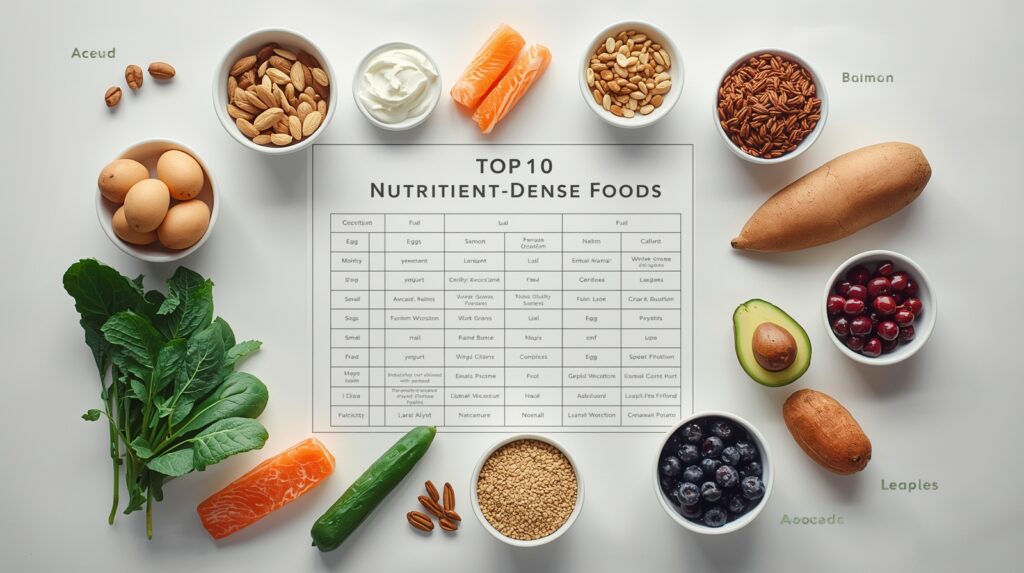

Nutrient-dense foods supply a high concentration of vitamins, minerals, and beneficial compounds relative to their calorie content. Including these foods in daily meals helps support metabolism, immune function, recovery, and long-term health. This guide presents ten of the most nutrient-dense foods supported by research, explaining their key nutrients and practical methods for regular use.
1. Eggs
Eggs provide a complete source of protein with essential amino acids required for tissue repair and maintenance. They also contain choline, which supports brain and nerve function, and fat-soluble nutrients such as vitamin D and B12.
Nutritional Highlights:
- High-quality protein per serving
- Source of choline, selenium, and B vitamins
- Contains lutein and zeaxanthin for eye function
How to Include in Meals:
- Hard-boiled eggs for portable snacks
- Scrambled or poached for breakfast
- Added to salads or grain bowls for extra protein
Cooking methods that minimize added fats maintain nutrient integrity while preserving digestibility.
2. Leafy Green Vegetables
Leafy greens such as spinach, kale, collard greens, and Swiss chard contain fiber, calcium, iron, and plant-based compounds beneficial for circulation and digestion. They are low in calorie density yet high in micronutrients.
Nutritional Highlights:
- Vitamin K and folate
- Iron and magnesium
- Dietary fiber and antioxidants
How to Include in Meals:
- Add fresh greens to smoothies
- Use as salad bases or steamed sides
- Mix into soups or stir-fries
Rotating different greens across the week ensures a broader nutrient profile.
3. Salmon and Fatty Fish
Fatty fish such as salmon, sardines, mackerel, and trout supply omega-3 fatty acids, which play roles in brain, heart, and joint function. They also deliver vitamin D and selenium.
Nutritional Highlights:
- Omega-3 fatty acids (EPA and DHA)
- Vitamin D and B12
- High-quality protein
How to Include in Meals:
- Grill or bake for main dishes
- Mix canned salmon with vegetables for quick meals
- Add sardines to salads or whole-grain crackers
Consuming fatty fish two to three times per week aligns with global dietary recommendations for long-term health maintenance.
4. Legumes (Beans, Lentils, and Chickpeas)
Legumes provide plant-based protein, fiber, and slow-digesting carbohydrates that support stable energy. They also supply iron, magnesium, and potassium.
Nutritional Highlights:
- Complex carbohydrates and soluble fiber
- Iron, magnesium, and folate
- Plant protein source for meat-free diets
How to Include in Meals:
- Add cooked beans to salads, soups, or grain bowls
- Use lentils as a base for stews and curries
- Make hummus or bean dips as snacks
Soaking and cooking legumes properly improve nutrient absorption and digestion.
5. Nuts and Seeds
Nuts and seeds provide concentrated nutrients and healthy fats. They supply essential minerals such as magnesium, zinc, and phosphorus, along with plant-based omega-3s.
Nutritional Highlights:
- Unsaturated fats and omega-3s
- Magnesium, zinc, and vitamin E
- Fiber and plant protein
How to Include in Meals:
- Eat a small handful as a snack
- Sprinkle over yogurt, oatmeal, or salads
- Blend into smoothies or nut-based sauces
Moderation supports calorie balance while maintaining nutrient variety.
6. Berries
Berries such as blueberries, strawberries, raspberries, and blackberries deliver vitamins, fiber, and natural plant compounds that help reduce oxidative stress.
Nutritional Highlights:
- Vitamin C and manganese
- Soluble fiber and natural pigments
- Low energy density
How to Include in Meals:
- Add to oatmeal or yogurt
- Blend into smoothies
- Use as natural toppings for whole-grain pancakes or desserts
Frozen berries retain similar nutrient content and offer year-round convenience.
7. Whole Grains
Whole grains provide carbohydrates, fiber, and a range of B vitamins necessary for energy production. Unlike refined grains, they retain the bran and germ, supplying more minerals and fiber.
Nutritional Highlights:
- Complex carbohydrates and fiber
- B vitamins (thiamine, niacin, folate)
- Iron, magnesium, and selenium
How to Include in Meals:
- Use brown rice, quinoa, or oats as meal bases
- Prepare overnight oats or grain bowls
- Replace refined bread with whole-grain alternatives
Combining whole grains with protein and vegetables enhances nutrient absorption and satiety.
8. Greek Yogurt and Fermented Dairy
Greek yogurt provides concentrated protein and beneficial bacteria that support gut function. It also delivers calcium, potassium, and vitamin B12.
Nutritional Highlights:
- High protein per serving
- Calcium and potassium
- Live cultures that support digestion
How to Include in Meals:
- Use plain Greek yogurt as a breakfast base with fruit or oats
- Substitute for cream in sauces and dressings
- Combine with nuts or honey as a balanced snack
Fermented dairy adds variety and promotes a balanced gut microbiome when consumed consistently.
9. Sweet Potatoes
Sweet potatoes provide slow-digesting carbohydrates and fiber along with several key nutrients. They also contain carotenoids that support vision and immune function.
Nutritional Highlights:
- Complex carbohydrates
- Fiber, potassium, and vitamin C
- Beta-carotene for conversion to vitamin A
How to Include in Meals:
- Bake or roast for side dishes
- Mash as a substitute for refined starches
- Add to salads or grain bowls for sustained energy
Balancing sweet potatoes with protein and greens forms a complete nutrient-dense meal.
10. Avocados
Avocados provide monounsaturated fats and essential nutrients like potassium, folate, and fiber. They support nutrient absorption from other foods when included in mixed meals.
Nutritional Highlights:
- Monounsaturated fats
- Potassium and folate
- Fiber for digestive support
How to Include in Meals:
- Add slices to sandwiches or wraps
- Blend into smoothies for texture and nutrients
- Use mashed avocado as a spread or dip
Due to their calorie density, small portions maintain balance within daily intake goals.
Combining Nutrient-Dense Foods
Each food group contributes unique nutrients, and variety ensures broad coverage. The goal is to combine multiple nutrient-dense items in each meal for maximum benefit.
Example Daily Structure:
| Meal | Example | Key Nutrient Sources |
|---|---|---|
| Breakfast | Greek yogurt with berries and oats | Protein, fiber, antioxidants |
| Snack | Nuts and fruit | Healthy fats, minerals |
| Lunch | Grilled salmon with leafy greens and quinoa | Omega-3s, fiber, protein |
| Snack | Boiled egg and vegetables | Protein, vitamins |
| Dinner | Lentil stew with sweet potatoes and side salad | Complex carbs, fiber, iron |
This pattern balances macronutrients while maintaining nutrient density across meals.
How Nutrient Density Supports Everyday Wellness
- Sustained Energy:
Balanced micronutrient intake supports consistent energy release. - Immune Function:
Vitamins and minerals such as zinc, vitamin C, and selenium strengthen immune response. - Metabolic Health:
Whole foods improve digestion and glucose control through fiber and phytonutrients. - Recovery and Performance:
Amino acids and essential fats enhance muscle repair and cognitive focus.
Regular intake of nutrient-dense foods enhances overall wellness without requiring complex diet structures.
Practical Tips for Integration
- Plan Grocery Lists Around Core Foods
Base weekly shopping on key nutrient-dense staples such as eggs, vegetables, legumes, and grains. - Batch Cook for Efficiency
Prepare proteins, grains, and vegetables in advance for balanced meals. - Use Simple Meal Templates
Combine protein + fiber + healthy fat for each meal to maintain nutrient variety. - Rotate Food Choices
Alternate between different nutrient-dense foods to prevent dietary monotony and ensure wide nutrient coverage. - Balance Portions
Even nutrient-rich foods can contribute to excess intake if portion sizes are uncontrolled.
How to Evaluate Nutrient Density
Nutrient density can be measured using nutrient-to-calorie ratios or scoring systems like the Nutrient Rich Foods Index (NRF). Foods with high scores deliver more vitamins and minerals per calorie.
Key Factors Influencing Nutrient Density:
- Degree of processing
- Cooking methods
- Food combinations
Selecting minimally processed foods and cooking with gentle heat methods helps retain nutrients.
The Role of Cooking Methods
Cooking can improve digestibility but sometimes reduces certain nutrients.
Best Practices:
- Steam or roast vegetables to preserve nutrients
- Use minimal oil when pan-cooking proteins
- Avoid overboiling to prevent vitamin loss
- Combine raw and cooked options for balance
Integrating diverse cooking techniques maximizes both taste and nutrient retention.
Common Myths About Nutrient-Dense Eating
- Myth: Nutrient-dense eating requires expensive foods.
Fact: Many affordable staples such as beans, oats, and eggs provide high nutrient value. - Myth: Superfoods replace balanced meals.
Fact: Nutrient density comes from overall dietary patterns, not individual foods. - Myth: Supplements can replace whole foods.
Fact: Whole foods deliver fiber and phytonutrients unavailable in most supplements.
Building Long-Term Habits
Maintaining nutrient-dense eating depends on consistency, not restriction.
Steps for Long-Term Success:
- Keep nutrient-rich snacks available
- Prepare weekly meal plans
- Track progress using simple journaling or apps
- Make gradual adjustments rather than sudden changes
Sustainability ensures nutrient density becomes part of everyday routine rather than a short-term goal.