
Balanced nutrition supports long-term health and stable energy. For many people with demanding schedules, maintaining proper nutrition often becomes difficult. This guide presents a structured approach to balanced nutrition for busy individuals. It focuses on efficiency, planning, and smart meal composition.
The goal is to help people make consistent food choices that support energy, concentration, and recovery. By following this guide, a busy person can prepare balanced meals without losing time or relying on processed options.
This article explains the foundation of balanced nutrition, the importance of macronutrients, time-efficient strategies for meal preparation, and a complete one-day meal plan for a busy routine.
Understanding Balanced Nutrition
Balanced nutrition refers to providing the body with adequate amounts of macronutrients and micronutrients. These nutrients work together to sustain body functions, maintain energy balance, and promote overall well-being.
Macronutrients
- Protein
Protein supports muscle maintenance, tissue repair, and hormone production. It should be included in every main meal. Common sources include chicken, fish, eggs, legumes, tofu, and dairy products. - Carbohydrates
Carbohydrates are the body’s primary source of energy. Focus on complex carbohydrates such as whole grains, oats, fruits, and vegetables that digest slowly and maintain stable blood glucose levels. - Fats
Healthy fats support cell structure, brain function, and nutrient absorption. Include sources such as nuts, seeds, olive oil, and fatty fish.
Micronutrients
Vitamins and minerals regulate metabolism, immunity, and energy production. A varied diet that includes fruits, vegetables, grains, and protein sources ensures sufficient micronutrient intake.
Hydration
Water supports every metabolic process. Dehydration can reduce focus and performance. Aim for consistent fluid intake throughout the day, not only during meals.
Challenges for Busy People
Busy individuals often skip meals, rely on convenience foods, or eat irregularly. These habits lead to inconsistent nutrient intake, energy crashes, and poor digestion.
Common challenges include:
- Limited time for meal preparation
- Lack of planning or grocery organization
- Dependence on takeout and processed foods
- Unbalanced macronutrient distribution
- Skipping breakfast or eating late dinners
The solution is structured planning. Balanced nutrition for busy schedules requires preparation, organization, and simple meal construction.
Principles of Balanced Nutrition for Busy People
- Plan Ahead
Dedicate one day each week to plan meals, create grocery lists, and prepare ingredients. - Simplify Meals
Choose recipes that require minimal cooking steps but still provide protein, carbohydrates, and fats. - Batch Cooking
Cook large portions of grains, proteins, or vegetables for use in multiple meals. - Portion Control
Divide meals into balanced portions to avoid overeating or under-eating. - Consistent Timing
Eat at regular intervals to maintain steady energy. - Nutrient Density
Select foods that provide high nutritional value relative to calorie content.
Structure of a Balanced Day
A typical balanced day for a busy person includes three main meals and two small snacks. The following plan provides structure, timing, and balanced composition for each meal.
Full-Day Meal Plan for Busy People
Morning Routine (6:00 a.m. – 8:00 a.m.)
Breakfast: Quick Overnight Oats Bowl
Ingredients
- Rolled oats
- Unsweetened almond milk or dairy milk
- Chia seeds
- Plain Greek yogurt
- Sliced banana
- Small handful of nuts or seeds
Preparation
Combine oats, milk, and chia seeds in a jar the night before. In the morning, top with yogurt, banana slices, and nuts.
Nutritional Breakdown
- Protein from yogurt and milk
- Complex carbohydrates from oats and banana
- Healthy fats from nuts and chia seeds
- Fiber supports digestion
Why It Works
This meal requires no morning cooking. It supports energy and focus during early hours. It can be prepared in bulk for several days to save time.
Mid-Morning Snack (10:00 a.m. – 11:00 a.m.)
Snack: Protein-Rich Smoothie
Ingredients
- Protein powder or Greek yogurt
- Frozen berries
- Spinach
- Oat milk or water
Preparation
Blend all ingredients until smooth. Keep in a reusable bottle for convenience.
Nutritional Breakdown
- Protein for muscle support
- Natural carbohydrates from berries
- Micronutrients from spinach
Why It Works
This portable snack stabilizes hunger and maintains focus between breakfast and lunch.
Lunch (12:00 p.m. – 1:30 p.m.)
Meal: Balanced Grain Bowl
Ingredients
- Quinoa or brown rice (cooked in advance)
- Grilled chicken breast or tofu
- Mixed vegetables (broccoli, bell peppers, spinach)
- Olive oil and lemon dressing
Preparation
Combine all ingredients in a bowl or container. Store in a portable lunch box.
Nutritional Breakdown
- Protein from chicken or tofu
- Complex carbohydrates from grains
- Fiber and micronutrients from vegetables
- Healthy fats from olive oil
Why It Works
This meal provides sustained energy for the afternoon. It is easy to prepare in batches for multiple days.
Afternoon Snack (3:00 p.m. – 4:00 p.m.)
Snack: Nuts and Fruit Combo
Ingredients
- Mixed nuts (almonds, walnuts, cashews)
- One piece of fruit (apple, pear, or orange)
Preparation
Pack nuts in small portions and pair with fruit for a quick option during work or travel.
Nutritional Breakdown
- Fats and protein from nuts
- Natural carbohydrates and fiber from fruit
Why It Works
This combination keeps energy stable between lunch and dinner without excess sugar.
Evening Meal (6:00 p.m. – 8:00 p.m.)
Dinner: Simple Stir-Fry Plate
Ingredients
- Lean protein source (fish, chicken, or tofu)
- Mixed vegetables (carrots, broccoli, zucchini, onions)
- Brown rice or quinoa
- Soy sauce or olive oil
Preparation
Cook vegetables in a pan with olive oil. Add protein and sauce. Serve with pre-cooked grains.
Nutritional Breakdown
- Balanced macronutrient ratio
- Natural flavor from whole ingredients
- Provides recovery nutrients for evening
Why It Works
This dinner can be prepared in less than 20 minutes using pre-cooked grains and pre-cut vegetables.
Optional Evening Snack (if needed)
Snack: Greek Yogurt with Seeds
Ingredients
- Plain Greek yogurt
- Chia seeds or flaxseeds
Preparation
Mix seeds into yogurt and serve chilled.
Nutritional Breakdown
- Protein and calcium from yogurt
- Fiber and omega-3 fatty acids from seeds
Meal Prep Strategy
Balanced nutrition for busy people depends on planning. The following preparation strategy supports consistent meal quality and reduces time spent each day.
1. Weekly Grocery List
Organize purchases by food group:
- Proteins: Chicken, fish, tofu, eggs, yogurt, legumes
- Carbohydrates: Oats, quinoa, rice, whole grain bread, fruits, vegetables
- Fats: Nuts, seeds, olive oil, avocado
- Extras: Herbs, spices, low-sodium sauces
2. Batch Cooking
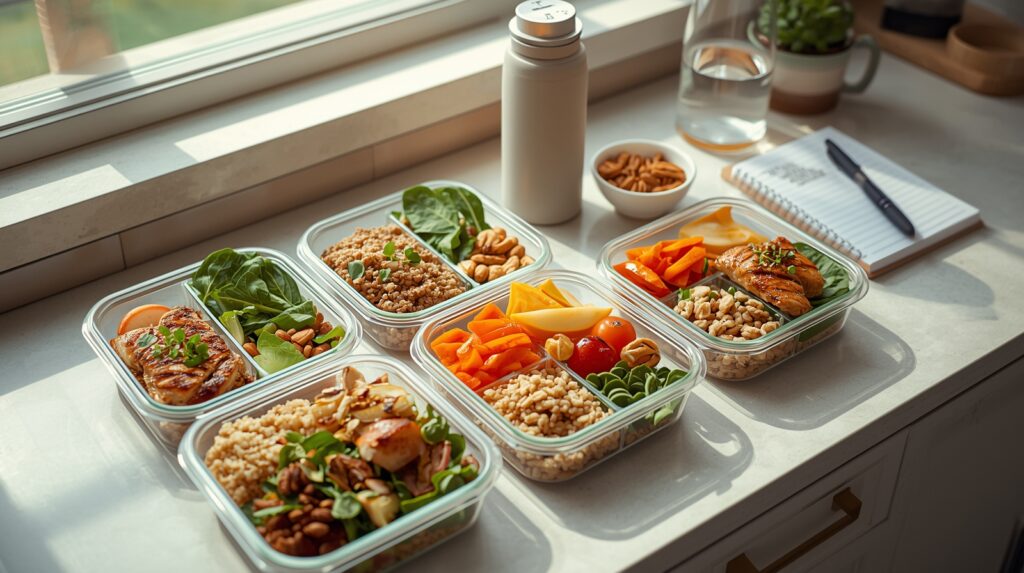
- Cook grains such as rice or quinoa in bulk. Store in containers for use throughout the week.
- Roast or grill multiple servings of protein at once.
- Chop vegetables in advance and refrigerate in sealed containers.
3. Smart Storage
Use airtight containers labeled by meal type. Keep snacks like nuts or fruit visible and accessible.
4. Repetition
Repeating meals simplifies decision-making. Rotate between a few balanced options for efficiency.
Time Management and Nutrition
Nutrition improves when time is used effectively. The following strategies align healthy eating with a demanding schedule.
- Set a Meal Schedule
Schedule meals in a calendar to prevent skipped meals. - Use Short Breaks Efficiently
Utilize 10-minute breaks to eat prepared meals or snacks instead of relying on convenience foods. - Portable Meals
Keep portable containers and utensils ready for travel or office use. - Workplace Storage
Store healthy snacks such as nuts, fruits, or protein bars in the workspace. - Technology Support
Use apps for meal tracking or reminders to maintain consistency.
Macronutrient Balance Guidelines
Balanced meals maintain a ratio of macronutrients that supports performance and satiety.
- Protein: 25–35% of daily calories
- Carbohydrates: 40–50% of daily calories
- Fats: 20–30% of daily calories
Each main meal should contain all three macronutrients. Snacks should include at least one source of protein or healthy fat for stability.
Adapting to Dietary Preferences
The structure of balanced nutrition applies to all dietary preferences.
- Vegetarian: Replace meat with tofu, tempeh, legumes, or lentils.
- Vegan: Include plant-based proteins such as beans, chickpeas, quinoa, and nuts.
- Gluten-Free: Use rice, quinoa, or oats instead of wheat-based grains.
- Low-Carbohydrate: Focus on protein and non-starchy vegetables with moderate healthy fat intake.
Avoiding Common Mistakes
- Skipping Breakfast
Leads to energy imbalance later in the day. - Overreliance on Processed Snacks
Reduces nutrient quality and increases calorie intake. - Low Water Intake
Affects focus and digestion. - Large Evening Meals
May disrupt sleep and digestion. - Inconsistent Portions
Leads to energy fluctuations.
Maintaining Consistency
Balanced nutrition requires consistency more than complexity. Focus on small habits:
- Keep simple staples available.
- Prepare in advance when possible.
- Choose whole foods over packaged options.
- Track progress weekly.