
Portion control is a structured way of managing food intake without strict dieting or calorie counting. It helps maintain energy balance, support healthy weight, and improve eating awareness. Understanding the science of portion sizes allows for better food decisions, preventing overeating while still providing enough fuel for daily activity.
This article explains the science behind portion control, how the body responds to food volume and energy density, and how to design a sustainable plan for daily life.
Understanding Energy Balance
The foundation of portion control lies in energy balance — the relationship between calories consumed and calories used.
- When calorie intake equals calorie use, body weight remains stable.
- When intake exceeds expenditure, the body stores extra energy as fat.
- When intake falls below expenditure, the body uses stored energy for fuel.
Portion control provides a method to manage this balance without eliminating food groups or restricting meals completely.
How Portion Size Affects the Body
Human appetite is influenced by visual cues, stomach stretch receptors, hormones, and the brain’s reward system. Larger portions trigger greater consumption, even when hunger is already satisfied.
Studies in nutrition science show that increasing the volume of food — without changing calorie density — leads to higher intake. This effect is known as the portion size effect.
Learning to recognize the right portion sizes helps align food intake with actual hunger rather than environmental triggers.
The Role of Satiety and Hunger Hormones
Two primary hormones regulate hunger and fullness: ghrelin and leptin.
- Ghrelin: Stimulates appetite, increasing before meals and decreasing after eating.
- Leptin: Signals satiety to the brain, reducing hunger after food intake.
Large, high-calorie meals can blunt leptin response, while consistent overeating raises the body’s “normal” intake threshold. Portion control helps restore these hormonal signals by promoting regular, balanced meals without extremes in calorie load.
Energy Density and Food Volume
Energy density refers to the number of calories per gram of food. Foods with low energy density allow larger portions without excessive calorie intake.
Low-Energy-Dense Foods:
- Vegetables
- Fruits
- Legumes
- Whole grains
- Lean proteins
High-Energy-Dense Foods:
- Fried foods
- Desserts
- Processed snacks
- Oils and fats
Building meals with a base of low-energy-dense foods increases volume, improving satiety while maintaining moderate calorie intake.
Visual Tools for Portion Control
Using visual cues simplifies portion estimation. Instead of weighing every meal, compare serving sizes to everyday objects or hand measurements.
| Food Type | Portion | Visual Equivalent |
|---|---|---|
| Protein (meat, fish) | 1 serving (3–4 oz) | Palm of hand |
| Carbohydrates (rice, pasta) | 1 cup | Fist |
| Fats (oil, butter) | 1 tbsp | Thumb |
| Nuts or seeds | ¼ cup | Small handful |
| Cheese | 1 oz | Two fingers |
| Vegetables | 1–2 cups | Two fists |
This approach keeps portions realistic without relying on strict measurements.
The Plate Method
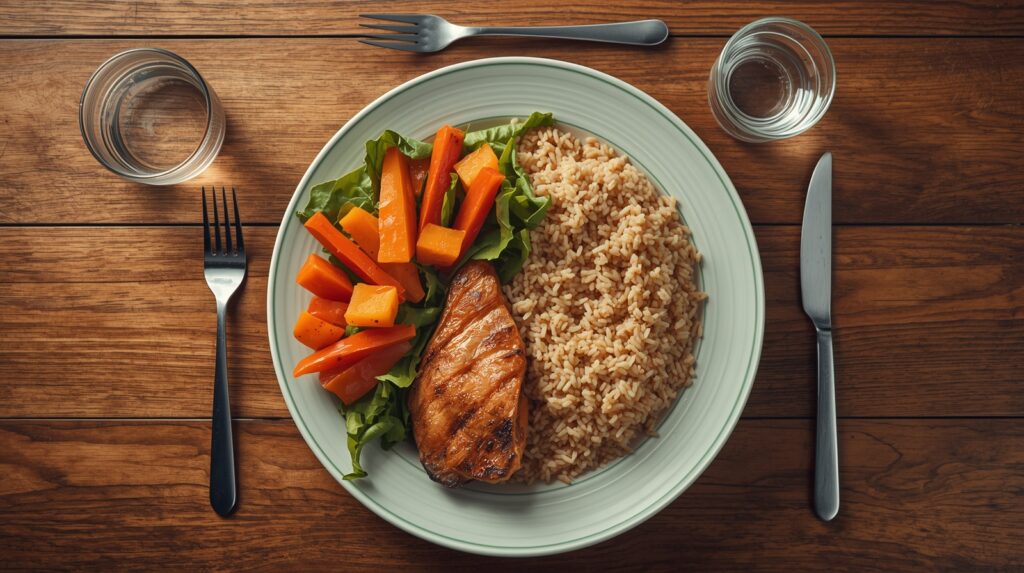
A simple way to apply portion control is through the plate method, designed by dietitians to balance macronutrients visually.
Step 1: Divide the Plate
- Half: Non-starchy vegetables
- One-quarter: Protein sources
- One-quarter: Carbohydrates or whole grains
Step 2: Add Healthy Fats
Include small amounts of nuts, olive oil, or avocado for balance.
Step 3: Monitor Liquid Calories
Drinks such as juice, soda, and alcohol contribute unnoticed calories. Prioritize water or unsweetened tea.
This structure maintains balance and portion awareness at every meal.
Psychological Triggers and Mindful Eating
Portion control also involves recognizing mental and emotional influences on eating. Distractions, stress, and habits often lead to overeating independent of hunger.
Strategies for Mindful Eating:
- Eat without screens or multitasking.
- Place utensils down between bites.
- Take 10–15 minutes to finish a meal.
- Rate hunger before and after eating on a scale of 1–10.
These steps improve awareness of portion size and fullness cues, reinforcing portion control naturally.
Role of Meal Frequency
Meal frequency influences hunger, metabolism, and portion size.
- Three main meals per day: Works for most individuals who prefer structured eating.
- Smaller, frequent meals: Helpful for athletes or those managing hunger spikes.
Regardless of meal count, total daily portions determine energy balance. Regular timing supports consistent hunger and fullness signals.
Portion Control in Practice
Applying portion control requires planning and repetition.
1. Breakfast Example
- One cup cooked oats
- One medium banana
- One tablespoon nut butter
- One boiled egg
2. Lunch Example
- Grilled chicken breast (palm-sized)
- Brown rice (fist-sized portion)
- Mixed vegetables filling half the plate
3. Dinner Example
- Baked salmon
- Roasted sweet potato (half fist)
- Salad with olive oil and vinegar
4. Snacks
- Greek yogurt with fruit
- Handful of nuts
- Vegetables with hummus
The focus is balanced distribution, not calorie elimination.
The Science Behind Smaller Plates
Research in behavioral nutrition shows that smaller dishes reduce consumption without decreasing satisfaction. This phenomenon, called the Delboeuf illusion, demonstrates that visual perception affects how much food appears on a plate.
Using smaller plates and bowls helps manage portions subconsciously. However, this technique works best when combined with mindful awareness rather than used alone.
Hydration and Portion Perception
Dehydration can mimic hunger, leading to larger portions. Drinking water before and during meals supports portion control by aiding digestion and improving fullness.
A simple guideline is to drink a glass of water 15–20 minutes before meals. Including high-water-content foods such as fruits and vegetables further enhances hydration.
Role of Fiber in Portion Control
Fiber-rich foods slow digestion and promote fullness. They expand in the stomach, increasing meal satisfaction without excess calories.
Sources of Dietary Fiber:
- Oats
- Beans and lentils
- Whole grains
- Vegetables
- Fruits
Adding fiber to each meal is a practical way to support portion control naturally.
How to Adjust Portions for Goals
- For Fat Loss:
- Reduce portion sizes slightly across meals
- Prioritize vegetables and protein
- Avoid cutting entire food groups
- For Maintenance:
- Keep portions consistent day to day
- Adjust based on activity levels
- For Muscle Gain:
- Increase portion size of carbohydrates and proteins moderately
- Maintain balance to avoid fat gain
Gradual changes prevent hunger and maintain energy stability.
Portion Control for Dining Out
Restaurants often serve portions double standard recommendations. Apply simple adjustments to maintain balance:
- Request half portions or share meals.
- Eat slowly and stop when comfortably full.
- Ask for sauces and dressings on the side.
- Focus on protein and vegetable options.
If extra food remains, save it for another meal instead of finishing it in one sitting.
Tools to Support Portion Awareness
Technology supports portion management through tracking and planning.
Useful Tools:
- Mobile apps for calorie or portion tracking
- Kitchen scale for learning portion sizes
- Meal prep containers with volume markings
- Visual charts for reference
These tools build long-term awareness, reducing dependence on precise tracking over time.
Common Misconceptions About Portion Control
- Myth: Portion control means eating very little.
Truth: It focuses on eating the right amount for energy balance. - Myth: Healthy foods can be eaten without limits.
Truth: Overeating any food can exceed energy needs. - Myth: Calorie counting is the same as portion control.
Truth: Portion control focuses on meal composition and awareness, not strict counting.
Building Sustainable Habits
Long-term success with portion control comes from consistency, not restriction.
Steps for Sustainability:
- Prepare meals regularly at home.
- Use consistent plate and bowl sizes.
- Plan weekly grocery lists based on balanced meals.
- Practice mindful eating daily.
Gradual improvement leads to permanent change in portion habits.
Adjusting Portions by Activity Level
Portions should adapt to energy demands:
- High-activity days: Slightly larger servings of grains and fruits for fuel.
- Rest days: Maintain protein and vegetables, reduce carb portions moderately.
This simple rotation supports consistent performance and recovery.
Portion Control and Emotional Eating
Stress, fatigue, and emotions can influence portion size. Recognizing emotional triggers prevents unplanned eating.
Techniques:
- Take a short walk or drink water before eating.
- Delay decisions about snacks for 10 minutes.
- Keep nutrient-dense snacks available for controlled eating.
Awareness breaks automatic habits that lead to overeating.
Training the Eye for Portion Accuracy
Over time, visual estimation improves through repetition.
Practice measuring portions for a week using a scale or measuring cups, then rely on memory and visual reference afterward.
Regular exposure helps develop reliable intuition for meal balance.
Cost-Effective Portion Control
Portion control reduces food waste and grocery expenses.
Tips:
- Cook moderate batches of food.
- Store leftovers in portioned containers.
- Buy in bulk but divide into meal-sized servings.
- Plan meals for three to five days in advance.
Efficient portioning saves both time and money.
Practical Daily Framework
| Meal | Portion Focus | Example |
|---|---|---|
| Breakfast | Balanced start | Eggs, toast, fruit |
| Snack | Protein focus | Yogurt or nuts |
| Lunch | Energy balance | Protein, grains, vegetables |
| Snack | Fiber focus | Fruit or raw vegetables |
| Dinner | Lighter portions | Fish, salad, small starch |
This structure can be adjusted based on activity and hunger patterns.
Integrating Portion Control into Family Meals
Teaching portion awareness benefits all age groups.
- Serve food in kitchen instead of on the table.
- Encourage self-serving for older children.
- Use smaller plates and bowls for everyone.
Shared awareness creates sustainable eating habits across households.
Long-Term Results of Portion Control
Consistent portion control can improve:
- Weight stability
- Energy levels
- Blood sugar regulation
- Digestive comfort
The long-term impact comes from steady practice rather than short-term restriction.
Portion control combines biological understanding, visual guidance, and mindful behavior to regulate energy balance. By managing food volume, recognizing hunger signals, and applying consistent meal structure, it is possible to eat in alignment with the body’s needs. Sustainable portion awareness allows improved nutrition without restriction, supporting both physical health and long-term lifestyle balance.