
Effective weight loss depends on calorie control, food quality, and consistency. Many people struggle because preparing healthy meals daily takes time and can be expensive. Meal prep offers a structured way to control nutrition while saving money and reducing food waste. This guide presents affordable meal prep strategies and a full seven-day plan designed to support weight loss without overspending.
The Purpose of Meal Prep
Meal prep involves preparing meals in advance for several days. The process ensures consistent portion control, minimizes unplanned eating, and reduces reliance on fast food or takeout. It also makes budgeting easier by allowing bulk purchasing and better ingredient use.
The objective of this plan is to provide structure for individuals seeking to lose weight with balanced nutrition and minimal expense.
Key Principles of Budget-Friendly Meal Prep
- Plan Before You Shop
Write a list of recipes and ingredients for the week. Check what you already have to avoid duplicates. Planning prevents impulse buying and wasted food. - Buy in Bulk When Possible
Purchase staples like rice, oats, beans, lentils, and frozen vegetables in bulk. These items provide consistent nutrition and longer shelf life. - Use Seasonal Produce
Select fruits and vegetables that are in season. They are usually more affordable and available in greater quantity. - Cook Once, Eat Multiple Times
Prepare base ingredients such as grains and proteins in large batches. Mix and match across meals for variety without additional cooking. - Measure Portions
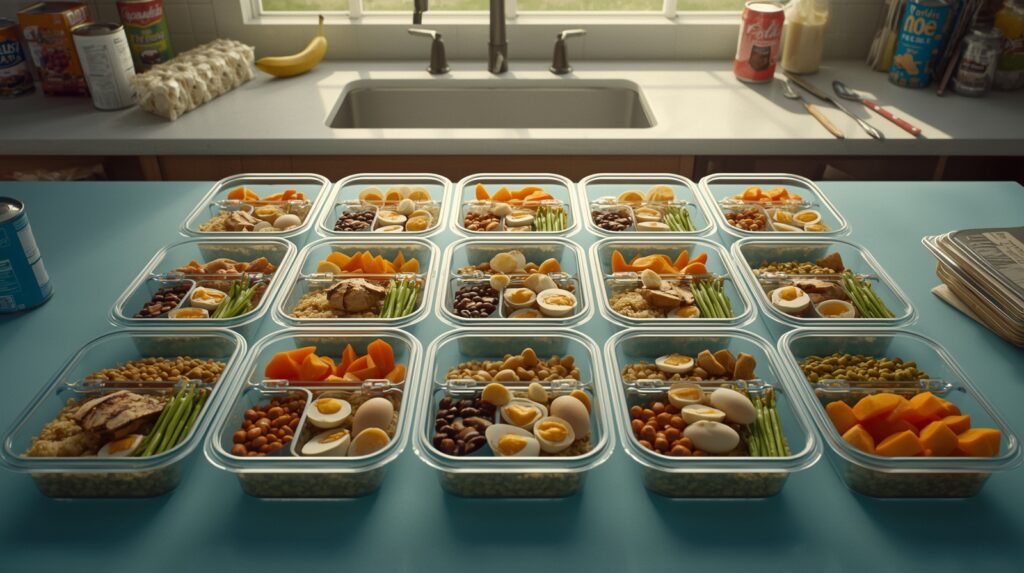
Pre-portion meals into containers that reflect your calorie goals. Consistent portions support gradual and sustainable weight loss.
Budget Shopping List for One Week
Proteins:
- Chicken breast or thighs
- Canned tuna or salmon
- Eggs
- Lentils
- Black beans
- Tofu
Carbohydrates:
- Brown rice
- Oats
- Sweet potatoes
- Whole wheat pasta
- Quinoa
Fats:
- Olive oil
- Natural peanut butter
- Nuts and seeds
Vegetables:
- Broccoli
- Spinach
- Carrots
- Zucchini
- Bell peppers
- Frozen mixed vegetables
Fruits:
- Bananas
- Apples
- Berries (fresh or frozen)
Others:
- Greek yogurt
- Skim milk or plant-based milk
- Whole grain bread
7-Day Healthy Meal Prep Plan
This plan provides structured meals for breakfast, lunch, dinner, and snacks. Portions may be adjusted based on calorie needs and goals.
Day 1
Breakfast: Overnight oats with rolled oats, milk, banana, and a spoon of peanut butter.
Lunch: Brown rice bowl with grilled chicken, broccoli, and olive oil drizzle.
Dinner: Baked salmon with quinoa and roasted vegetables.
Snack: Apple with Greek yogurt.
Day 2
Breakfast: Scrambled eggs with spinach and whole wheat toast.
Lunch: Tuna salad with lettuce, beans, and diced bell peppers.
Dinner: Stir-fried tofu with mixed vegetables and brown rice.
Snack: Handful of nuts or seeds.
Day 3
Breakfast: Oatmeal cooked with milk and topped with apple slices.
Lunch: Chicken and vegetable soup with lentils.
Dinner: Whole wheat pasta with beans and tomato sauce.
Snack: Greek yogurt with small portion of berries.
Day 4
Breakfast: Two boiled eggs and one slice of whole grain bread.
Lunch: Quinoa salad with black beans, corn, and diced vegetables.
Dinner: Baked chicken with sweet potato and green beans.
Snack: Banana or small portion of mixed nuts.
Day 5
Breakfast: Overnight oats with oats, milk, and frozen berries.
Lunch: Tofu and brown rice bowl with carrots and zucchini.
Dinner: Lentil stew with spinach and diced tomatoes.
Snack: Apple with a spoon of peanut butter.
Day 6
Breakfast: Greek yogurt mixed with oats and banana slices.
Lunch: Whole wheat pasta with tuna and mixed vegetables.
Dinner: Stir-fried chicken with quinoa and broccoli.
Snack: Cottage cheese with berries.
Day 7
Breakfast: Two boiled eggs with oats and milk.
Lunch: Lentil and vegetable curry with brown rice.
Dinner: Baked tofu with sweet potato and steamed spinach.
Snack: Apple or mixed seeds.
How to Prep Efficiently
- Batch Cook Proteins
Grill or bake several portions of chicken, tofu, or fish at once. Store in airtight containers for up to four days. - Cook Grains in Bulk
Prepare large quantities of rice, quinoa, or pasta. Divide portions for lunches and dinners. - Use Multi-Use Ingredients
Cook base vegetables such as carrots and broccoli that can fit into multiple dishes. - Freeze Meals for Later Use
Prepare extra portions and freeze them. Reheat as needed to avoid daily cooking. - Label and Store Properly
Label each container with meal names and dates. Store cooked meals in the refrigerator for up to four days or freezer for longer.
Sample Prep Schedule
Sunday:
- Cook all proteins and grains.
- Chop vegetables and store them in containers.
- Prepare overnight oats for three days.
Wednesday:
- Refresh salads and cook additional protein if needed.
- Replace fruit stock.
This rotation ensures freshness while minimizing daily cooking time.
Balancing Calories and Macros
A calorie deficit is necessary for weight loss. However, the focus should remain on nutrient density and variety.
- Protein: Helps preserve lean mass during weight loss.
- Carbohydrates: Provide energy for daily activity and exercise.
- Fats: Support hormone regulation and satiety.
A balanced daily ratio might include 40% carbohydrates, 30% protein, and 30% fats. Adjust based on hunger and results.
Ways to Cut Costs Further
- Use Store Brands
Generic or store-label products often cost less and provide the same quality. - Buy Frozen Instead of Fresh
Frozen fruits and vegetables have equal nutrition and longer shelf life. - Repurpose Leftovers
Turn cooked grains or proteins into new meals, such as wraps or soups. - Limit Specialty Items
Avoid expensive protein powders or supplements when real food covers requirements. - Cook at Home Only
Skip takeout entirely during the meal prep period to maximize savings.
Portion and Storage Guidelines
- Divide meals into individual containers immediately after cooking.
- Store perishable meals in the refrigerator and consume within four days.
- Keep one or two portions in the freezer for backup.
- Use clear containers for visibility and organization.
Hydration and Simple Add-Ons
Water intake supports metabolism and reduces hunger. Carry a refillable bottle and drink before each meal. Simple additions like lemon or cucumber slices improve taste without adding calories.
Adjusting the Plan
This seven-day plan can be repeated weekly with ingredient variations. Rotate proteins between chicken, tofu, fish, or lentils. Swap grains based on preference or sales. Adjust portion size according to weight-loss progress and energy needs.
Sample Budget Overview (Per Week Estimate)
| Category | Item | Approximate Cost (USD) |
|---|---|---|
| Proteins | Chicken, eggs, lentils, tofu | 20 |
| Carbohydrates | Rice, oats, pasta, potatoes | 10 |
| Vegetables | Frozen mixed vegetables, greens | 10 |
| Fruits | Bananas, apples, berries | 8 |
| Dairy/Other | Yogurt, milk, peanut butter | 7 |
| Total | 55 |
This structure keeps average weekly meal prep under 60 dollars while meeting nutritional targets for weight loss.
Practical Tips for Success
- Set one dedicated prep day each week.
- Store snacks in ready-to-grab portions.
- Track calories using an app for accuracy.
- Include one flexible meal per week for balance.
- Stay consistent for at least four weeks to see measurable results.
Weight loss on a budget is achievable with structured planning and disciplined meal preparation. Using affordable ingredients and simple cooking methods allows consistent calorie control and balanced nutrition. By following this seven-day plan, individuals can maintain progress without overspending or losing time during busy schedules.